
Time to Clean?
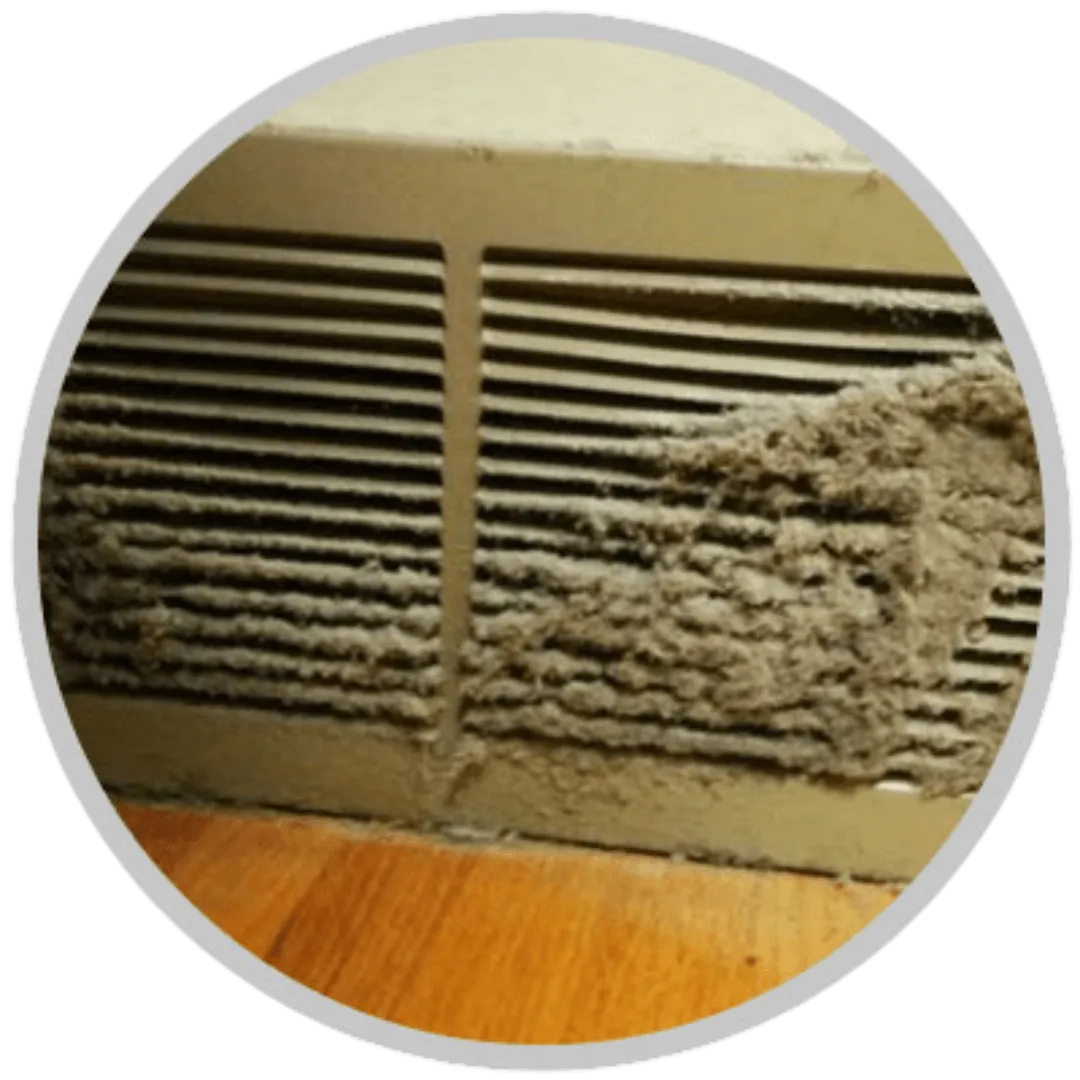
When you turn on your home’s heating or air conditioning, do you notice wisps of dust puffing out from the ducts? Do you see things like leaves or pet hair caught in your vents? Are your air vents coated with dust? If you’ve noticed any of these phenomena, it may be a sign that your air ducts need cleaning.
If you could see inside your HVAC system, you would probably find a host of particles that have collected on the air duct surfaces, vents, motors, and coils. It’s gnarly, but things like dead skin, hair, and pet dander cling to the dust. These particles become matted together and cause an environment where bacteria, mold, dust mites, and allergens can grow.
Your system’s air filters may remove most of these particles from the air stream, but the air filter doesn’t clean your HVAC system. You should check your system periodically to determine whether it needs to be cleaned.
The Consequences of Dirty Air Ducts
You may be wondering whether it really matters if your air ducts are a little dirty. In fact, there are several consequences which can have real effects in your home and on your health. Some of the problems caused by dirty air ducts include:
- Diminished effectiveness of your HVAC system. If your heat exchangers are clogged, they will not be able to heat your home as efficiently. Similarly, if your condensing coils are blocked by dust and other particles, they won’t be able to cool the air as well. Your HVAC system’s runtime will be lengthened, which means it will need to use more fuel and energy. Your bill may go up.
- Restricted air flow. Dirt and dust clogging your system means that air can’t circulate efficiently. Even if you haven’t noticed a problem with heating and cooling, your system will still be using more energy and fuel because it has to work harder.
- A worn-out HVAC system. It stands to reason that if your HVAC system has to work harder to heat and cool your home, it will also wear out faster.
- Contaminates circulating through your air. Dust contains particles from a multitude of sources, your pets, your own skin and hair, pollen, fungi, mold spores, and more. You can see how your home could easily become contaminated as bacteria grows in your system.
The Benefits of Air Duct Cleaning
To keep your home fresh and your HVAC system in good order, you’ll want to have your air ducts cleaned every 3 to 5 years. Here are just a few of the benefits you can enjoy with a clean HVAC system:
- Better and more reliable performance from your heating and cooling system.
- Fewer expensive repairs.
- Longer life for your HVAC system.
- Greater energy efficiency, which in turn saves you money on your energy bills.
- Lower likelihood of respiratory problems or allergies.
- A cleaner home.
There are real consequences to ignoring your air ducts and their cleanliness. On the flip side, making sure the air ducts are clean may mean that you can breathe a whole lot easier.

Cleaning the duct work in your home can reduce allergy symptoms.