


Environmental agencies
Continuous pollen, mold, and bioaerosol measurement for public health programs, municipalities, and environmental researchers.
ExplorePatented Particle Intelligence
Pollen Sense is a real-time airborne particle intelligence company. Our APS400 sensors combine optics, AI, and environmental science to measure pollen, mold, dust, smoke, and other particles, powering sensor networks, licensed datasets, and the Pollen Wise allergy app.
Meet the APS400
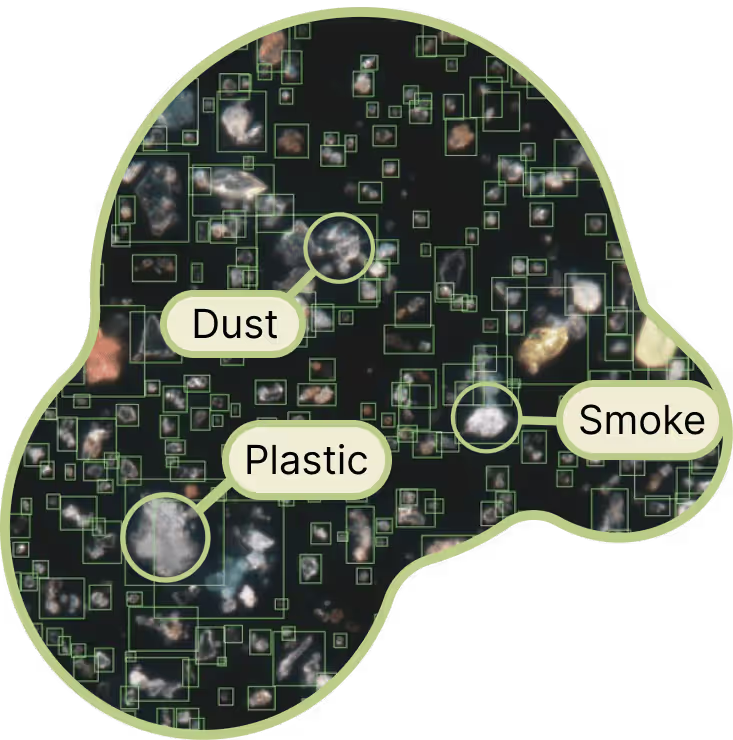
The APS400 images and identifies collected airborne particles in real time, including particles from 0.3 to 158 microns. With automated air sampling, the collection system responds to the air particle density to extend sample time and keep monitoring efficient in changing air conditions.
100M+
frames analyzed by AI
7B+
particles tagged to date
500K+
new frames added weekly
5M+
hours of accumulated monitoring time
Who We Serve
From public monitoring networks to indoor investigations, data products, and consumer allergy guidance, each use case runs on the same real-time measurement pipeline.
Continuous pollen, mold, and bioaerosol measurement for public health programs, municipalities, and environmental researchers.
Explore
Real-time and historical allergen datasets, forecasts, maps, APIs, CSV feeds, and partner integrations for local air quality coverage.
Explore
Discrete sampling, alerting, and reporting for mold, dust, smoke, remediation verification, compliance, and facility operations.
Explore
Consumer-grade pollen intelligence in Pollen Wise, with real measurements, forecasts, and better daily planning.
ExplorePartner logos shown: Microsoft Bing, Asthma and Allergy Foundation of America, Lumbara, NOAA, TISCH Environmental, Skygauge Technology, SKC.
Pollen Sense in Action
These scenarios show how measured particle data helps people understand what is in the air and make faster decisions about health, safety, and daily life.
Story 01
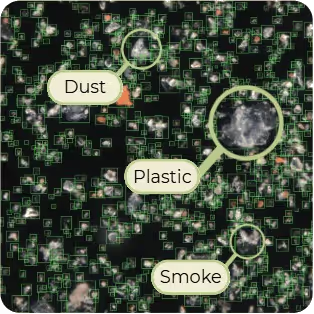
A factory owner needed to know whether poor air quality was putting his team's health and productivity at risk.
He had no idea how bad it was.
After seeing the data, he upgraded ventilation and filtration so workers could breathe easier while improving safety, morale, and compliance.
Story 02
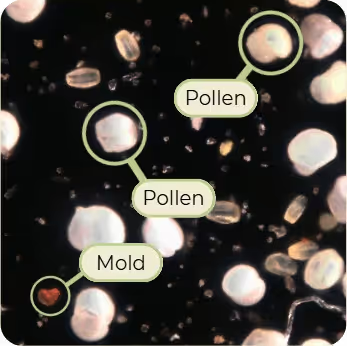
An allergy sufferer avoided going outdoors on high pollen days because weather and allergy sites could not tell him what was safe nearby.
For once, the air didn't hold him back.
Armed with real-time local data, he finally drove with the windows down and could breathe easier for the first time in years.
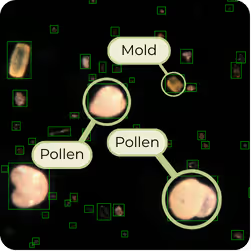
Story 03
A researcher studying airborne pollutants in underserved neighborhoods needed real-time, location-specific data to validate trends.
The data told a story no one else could see.
With real-time measurements, she could guide more accurate policy decisions and air quality interventions.
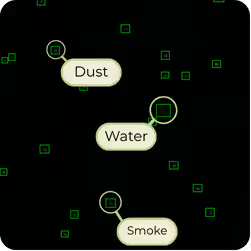
Story 04
A mother had mold removed from her home, but her kids still had symptoms and she needed to know whether the air was truly clean.
Seeing is believing.
The results confirmed the air was clean, giving her peace of mind that no other test could provide.
Why Real-Time Data Matters
What if the air you breathe is filled with invisible threats like microplastics, pollen, dust, smoke, and even mold? Pollen Sense turns those hidden particles into actionable data people can understand.
The Solution
Real-time particle identification, built for decisions in the field.
Airborne allergies affect hundreds of millions of people worldwide, and symptoms are increasing with climate change, urbanization, and extreme weather.
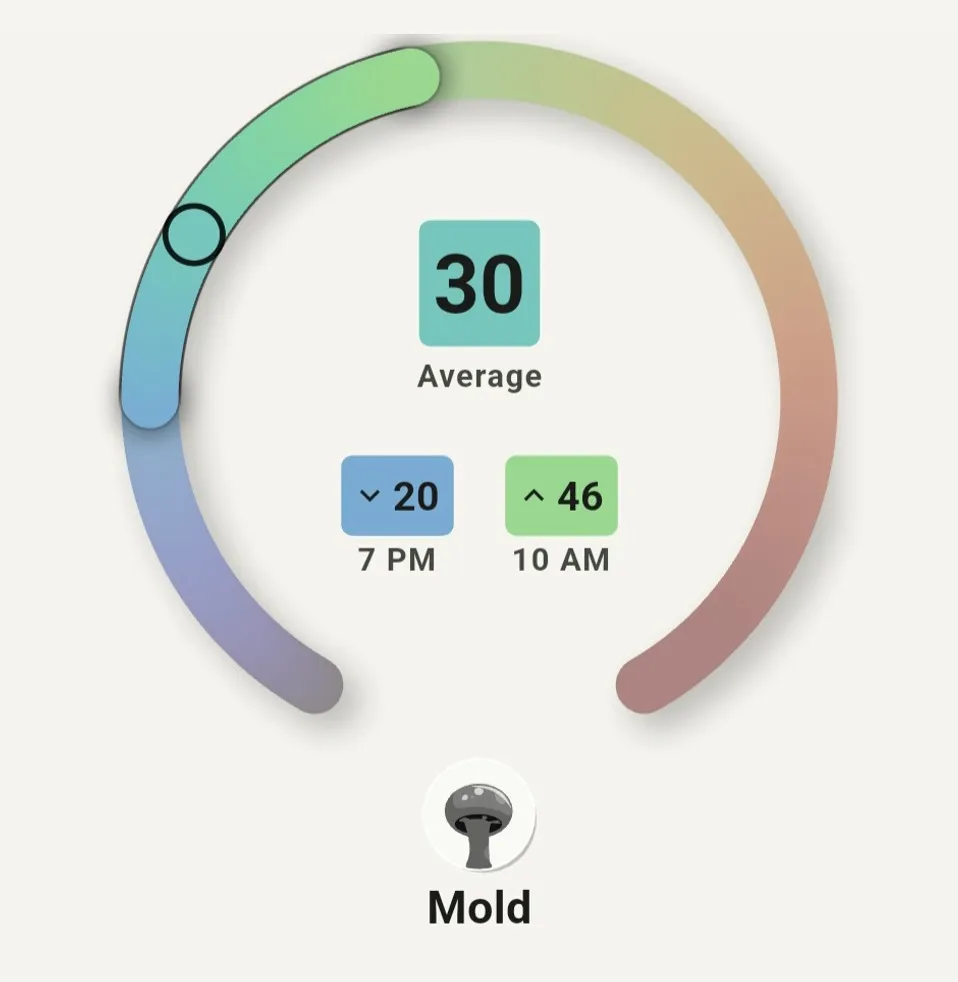
Indoor air can be 2-5x more polluted than outdoor air. Mold exposure can trigger asthma, fatigue, respiratory irritation, and longer-term health concerns.
From outdoor job sites to indoor facilities, workers need faster visibility into dust, smoke, mold, and other airborne particle risks.
Manual sampling and lab analysis often take days. Real-time particle identification helps teams act while exposure decisions still matter.
Proof at Scale
Pollen Sense is one of the world's largest allergen air quality data providers, with a historical, data-rich ecosystem built from real physical measurements.
Latest Updates
Read the latest product updates, allergy education, and public coverage of the Pollen Sense network.
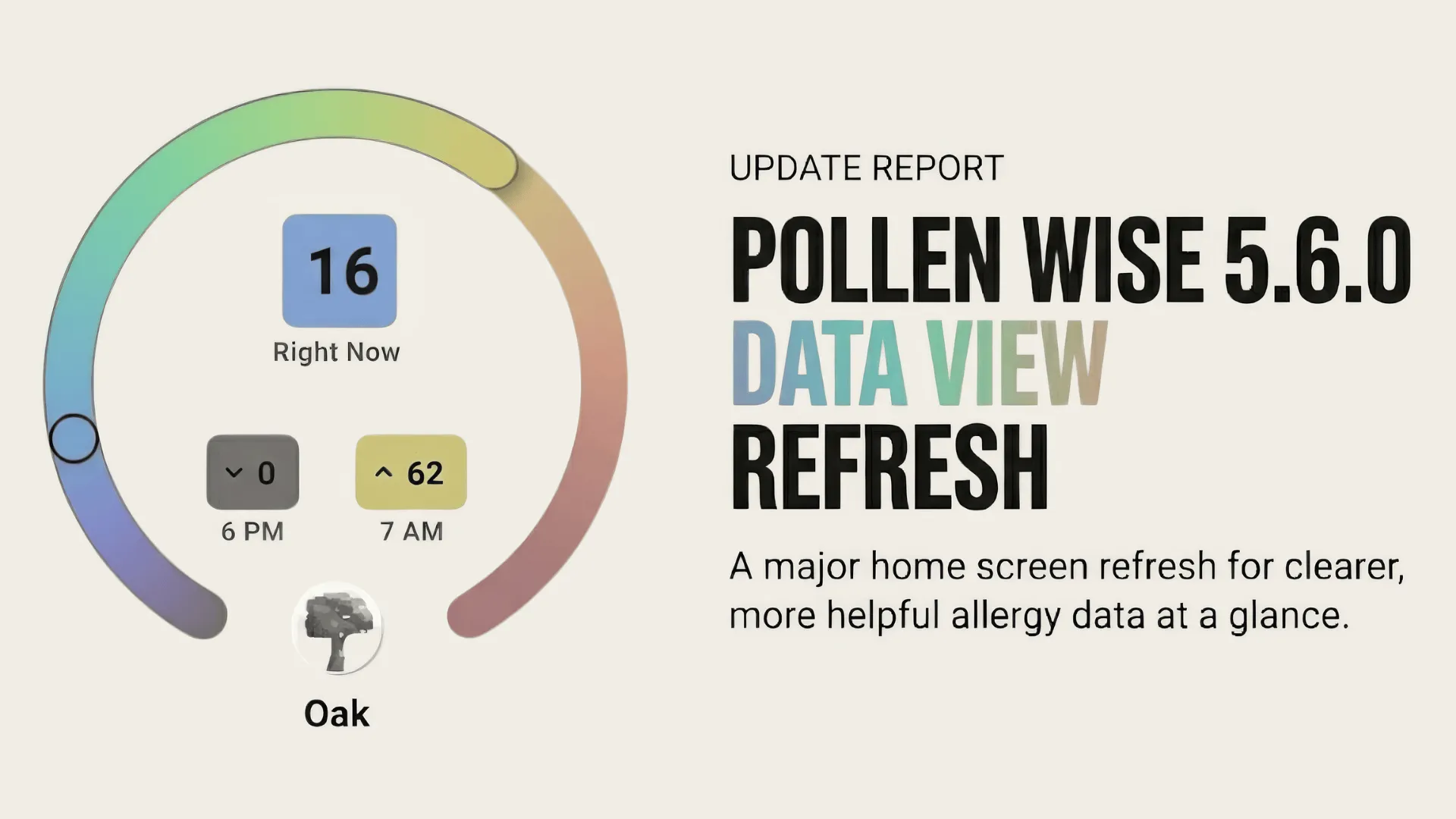
Pollen Sense News
We’ve been spending a lot of time reviewing feedback, reading survey responses, and looking closely at how people are using Pollen Wise. One common thread amongst the feedback and survey responses stuck out: people want the app to feel easier to understand at a glance, and more helpful in answering the question, “What should I care about right now?” That thinking shaped this latest update. This is a major refresh to the Pollen Wise home screen, and while we know there is still more to improve, this update is an important step. We’re continuing to build, refine, and learn, and your feedback is a big part of what helps us decide where to go next.
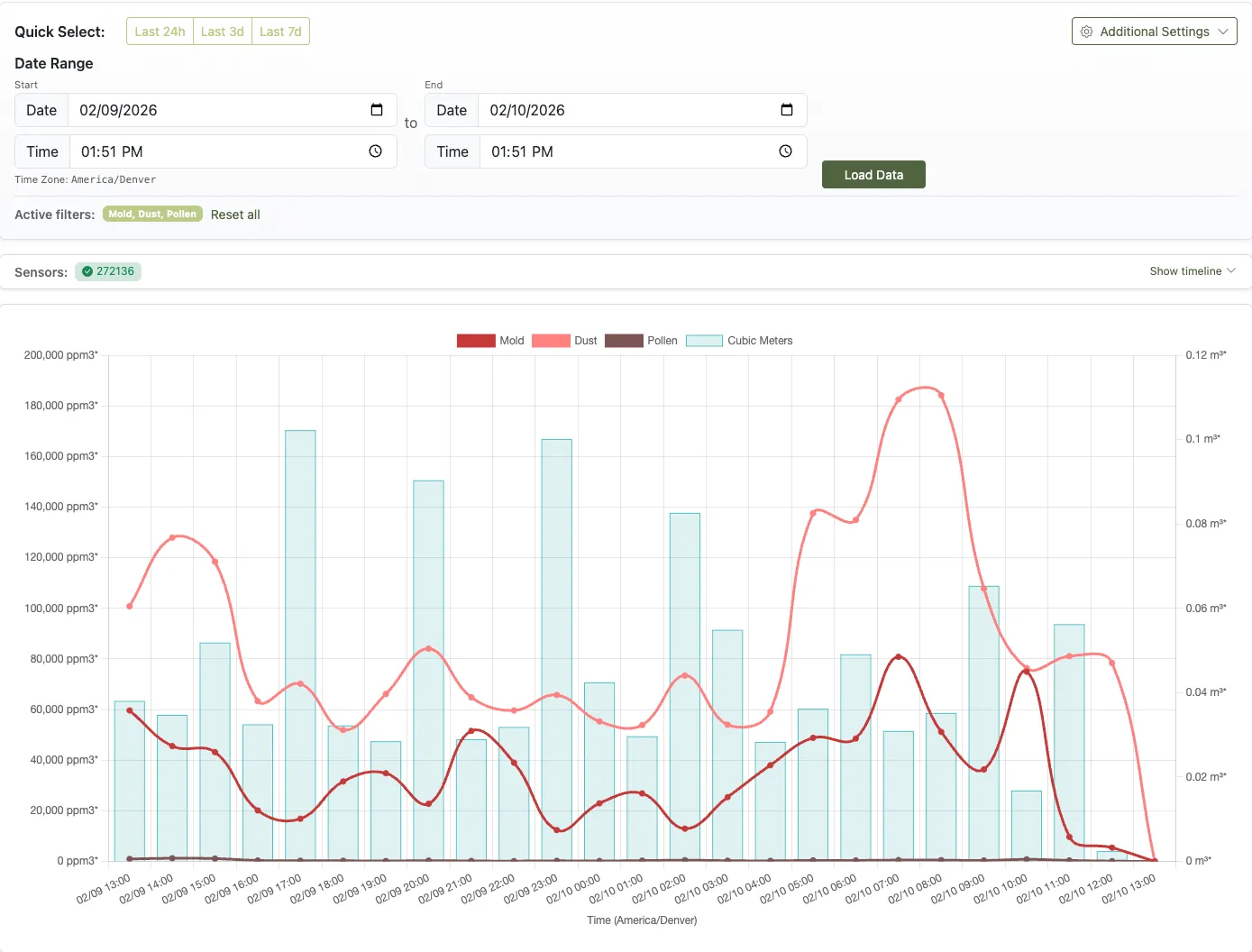
Pollen Sense News
Update: The data cutoff for legacy metrics data was changed from March 11 to March 23, 2026 6PM UTC. Data before that date will continue to be available for the forseeable future, however data after March 23, 2026 6PM UTC will no longer be present either in the legacy portal data viewer or via v1 APIs. Please use the V2 APIs and the Branch/Revision-powered data viewer in the portal for live incoming data
Pollen Sense News
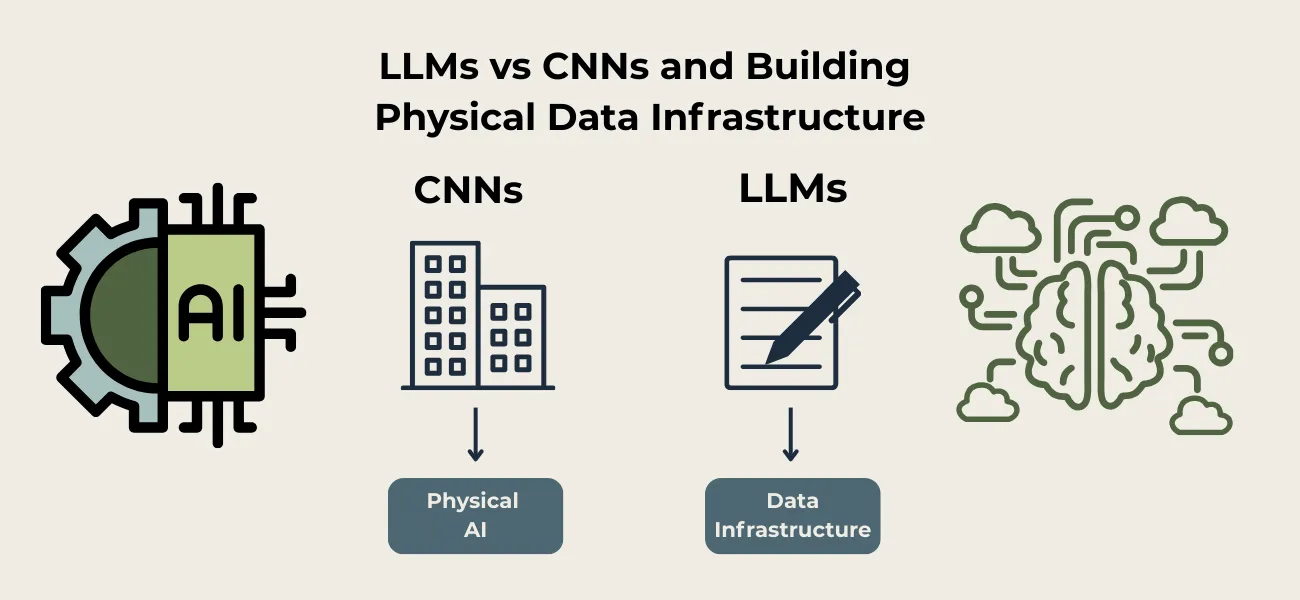
When we say “AI” at Pollen Sense, most people assume we mean LLMs. We don’t. When people hear that Pollen Sense is building AI data infrastructure, the default assumption is usually large language models, chatbots, text generation, or conversational AI. That’s understandable given the moment we’re in. But it’s not what we mean when we say AI. At Pollen Sense, AI data infrastructure means Physical AI, machine learning systems that directly observe the real world, classify physical signals in real time, and convert them into structured, trustworthy data that other systems can reason on.
CBS News · US
More than 100 million people in the U.S. experience allergies, including seasonal pollen allergies.
KOMO News · Seattle
Spring showers bring May flowers, but they also bring a longer pollen season, according to the Washington Department of Health.
KXAN · Austin, TX
Austin viewers can track cedar, mold, cottonwood, oak, ragweed, ash, pine, mulberry, elm, poplar, and more.
Take a Deep Breath
Whether you need a sensor network, licensing, or a better allergy experience, the same Pollen Sense infrastructure powers it.